MySanity Guides · November 1, 2026

How to track your mood and recognise emotional patterns

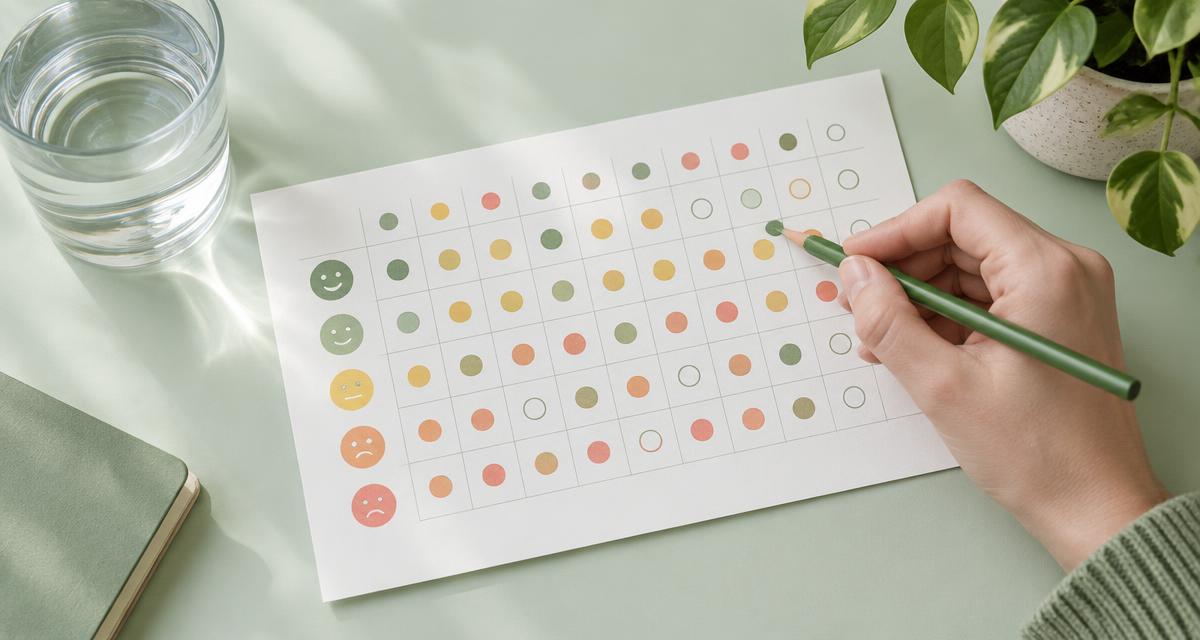
A hand recording feelings on a paper mood chart with coloured circles

To track your mood, record how you feel, how strong that feeling is and what was happening around you. Return to your notes regularly to look for repeated patterns. You can use paper, a simple document or a wellness app. The useful part is consistency, not choosing the perfect tool.

What is a mood tracker?

A mood tracker is a record of your feelings over time. A journal might explore one experience at length, while a mood log gives you a brief, consistent entry you can compare with other days. You can use both, but you do not need to write a long journal entry to track your mood.

NHS mood diary resources use fields such as emotion, intensity, situation and action. These notes can help you reflect on possible links between everyday circumstances and how you feel. They cannot diagnose a mental health condition or prove that one event caused a change in mood.

1. Choose a format you can keep using

Start with the easiest place to record a short entry. A notebook, a notes document or a mood tracking app can all work. Choose somewhere you feel comfortable keeping personal information, and check the privacy settings of any digital service you use.

Pick a familiar moment, such as after breakfast or before bed. Once a day is a practical starting point, not a clinical rule. If your feelings change significantly during the day, you can add another entry with the time.

2. Name the feeling and its intensity

Use a specific word where you can: calm, worried, frustrated, hopeful, lonely or content. It is fine to record more than one feeling. You might feel tired and grateful at the same time.

Use a consistent intensity scale. For example, let 1 mean a very mild feeling and 5 mean a very strong feeling. This is your personal reference, not a diagnostic score. Keep the meaning of the numbers the same so your entries are easier to compare.

3. Add a little context

Write down what was happening: an activity, a conversation, time alone or a demanding task. You can also note context such as sleep, energy or a change in routine. Keep it brief enough that the habit does not become another source of pressure.

An example entry might read: Tuesday evening. Worried, 4 out of 5. A deadline is approaching and I slept poorly. I took a short walk and spoke with a friend. This is an illustration, not a recommended response for every situation.

  • Date and time
  • Emotion words
  • Intensity using your own consistent scale
  • Situation or activity
  • What you did next, if anything

4. Review patterns without judging yourself

Choose a regular moment to look back, perhaps at the end of the week. Ask what was happening on the days you felt more settled, and what kept appearing when you felt strained. Notice the circumstances, not just the number.

If stressful evenings often follow a demanding day, that is a possible pattern worth exploring, not proof of cause. Consider one small, realistic adjustment and observe what happens. Do not use the log to label yourself, set a target of feeling happy every day or make changes to prescribed treatment.

5. Use MySanity if digital check ins suit you

MySanity is an AI mental health companion with daily check ins and personalised AI support. If a digital routine suits you, it can be one way to pause and reflect on how you are feeling. A paper log remains a valid choice; the best format is one you can use comfortably.

Use the prompts to put feelings into words, then reflect on the context behind them. MySanity is a wellness companion, not a medical device, and it does not provide medical advice, diagnosis or treatment. Its AI support is not a substitute for a qualified professional.

Common questions about mood tracking

What if I miss a day?

Continue with your next entry. You do not need to reconstruct feelings you cannot remember. A useful record does not have to be perfect.

How long does it take to notice a pattern?

There is no guaranteed timeframe. Repeated entries provide more context than one day, but some patterns stay unclear. Treat your observations as questions to explore, not conclusions about your health.

Can a mood tracker diagnose depression or anxiety?

No. A mood log can help describe your experiences, including during a conversation with a clinician, but diagnosis requires appropriate professional assessment.

When should I seek support?

If difficult feelings persist, interfere with daily life or worry you, contact a qualified healthcare professional. If tracking makes you more distressed or preoccupied, pause and discuss it with someone qualified. If you are in immediate danger or might harm yourself, contact local emergency services or a crisis service now rather than relying on an app.

MySanity

AI Mental Health Companion

Explore MySanity